The Art of It
There are difficult stretches, but I am enjoying many moments of wonder and wandering. Yesterday, I spent some time in the Ashmolean, trying to approach it the way Patrick Bringley advises in his book, All the Beauty in the World about his years as a guard at the Met. The first step, he writes, is to do nothing, just watch, giving your mind a chance to absorb what is there: “Much of the greatest art seeks to remind us of the obvious. This is real. That’s all it says. Take the time to stop and imagine or feel fully the things you already know.”
And so, I did. Across the millennia, in different garb and settings, came expressions and emotions that I recognized. Anguish in abundance, but also awe, adoration, arrogance, even annoyance. Just people after all. And there were faded, sunny views of Italy, an array of objects in glass cabinets once used in daily life, a young man looking sullen and defiant with his hand upon a skull: death, always nearer than suspected, partnering with youthful beauty.
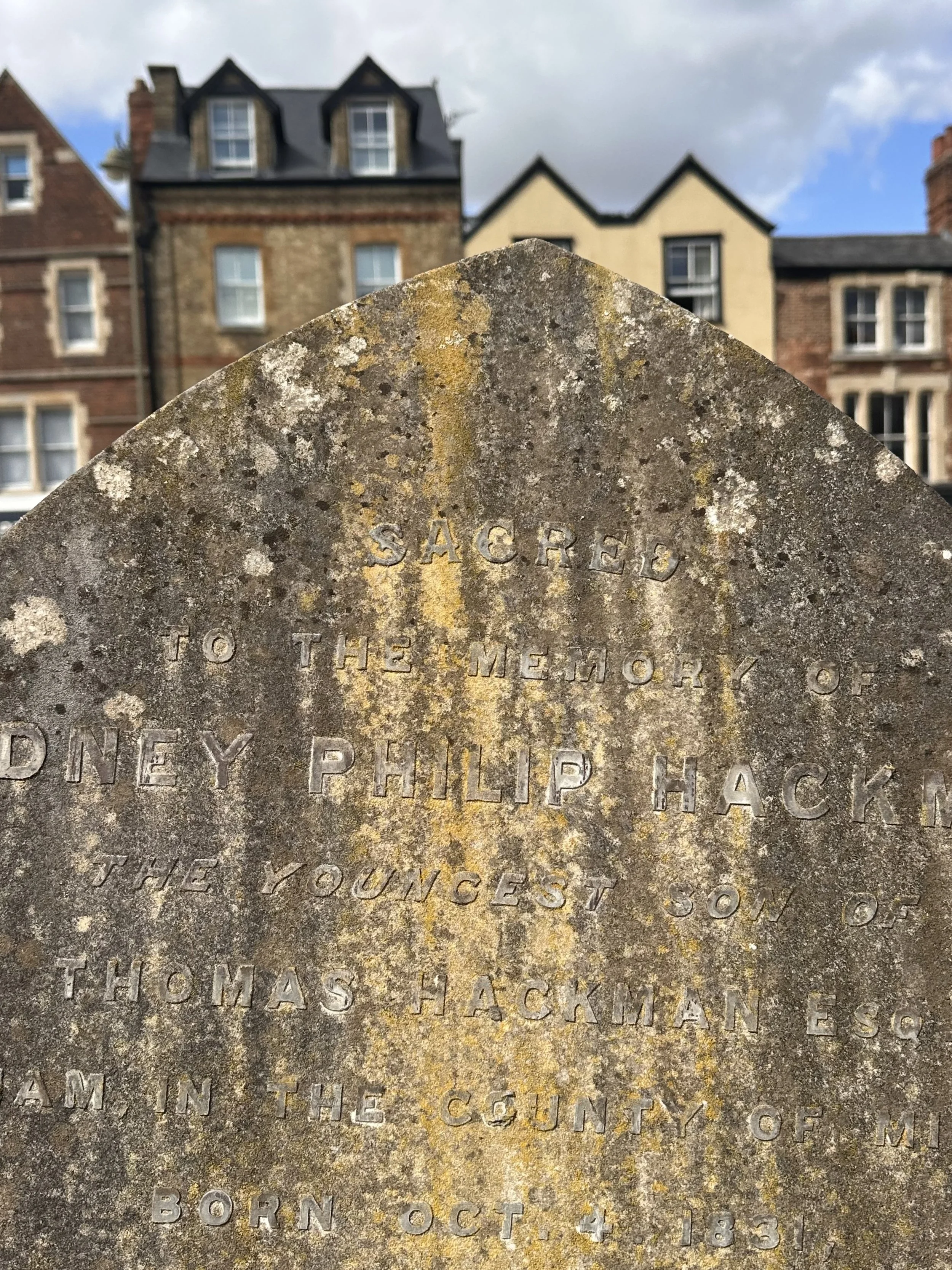
There was much more to see, but this small segment was satisfying, and I was hungry. I sat in the sunshine outside the museum and ate cantaloupe pieces and an apricot croissant for lunch, then did a walking tour of a nearby churchyard, observing what time and weather do to gravestones: letters eroded into slashes and dashes, streaks of moss, multihued layers of smooth and textured stone. It was a poignant gallery of the remnants of lives lived, many names lost to time, but all the sorrows and stories visceral and palpable somehow.
I had been thinking about the art of crafting a life, even a little life, reflections prompted by the closing of the aquarium shop in East Oxford after seventy years in business at the very same site. We went to the farewell celebration held on the street in front of the shop. A few locals drifted about in large inflatable sea creature costumes, children dipped eager hands into a basket of tiny aquarium figurines, and people lined up to congratulate and have pictures taken with the owner, who had been 14 years old when he started working here and now 56 years later, was closing shop. “It feels sad back there,” he told me. “All the tanks are empty now.”
Felix was worried about what would happen to the fish, but the owner assured us that they had gone to good homes and public aquariums. Milling about in the crowd outside were grown-ups who remembered hanging around in the shop as kids, fascinated by its steamy otherworldliness and the colorful occupants of the tanks, often not spending a penny but never chased away. New generations followed, and now the street had opened up like a thank you card, and the fish shop man looked happy and bewildered and mostly proud. He was famous here, and truly beloved. There are so many ways to live a life, so many roles one can choose to play in a community, and this was a small and meaningful one. Another form of art.
When I travel, I look back at the life I left behind and I cherish it more than ever and feel astonished by it. Seen from a distance, it’s almost mythological. The landscape, our community, the practices we have created, the decency and defiance I have witnessed, the duty undertaken, the ways in which we journey side by side. I am carrying a lot of sadness and worry with me, but I keep learning, again and again, that “home” is in my heart, that love will fuel and steady me, and that hope is not easily extinguished.
On the corner of Felix’s street stands Barry Lamppost, scratched and stalwart. Felix pointed him out to me, and he looks exactly like a red postal box, but it turns out that this is not his only persona.
“It’s cool that you have an imaginary friend,” I told Felix.
“He is not imaginary,” said Felix. He has been mentioning Barry since his toddler days, and I cannot fathom where that name comes from, but my inability to connect with Barry does not mean Barry isn’t real. I just don’t know postal box lamppost language. Few do.
But I nod to Barry Lamppost whenever I pass, and although he doesn’t acknowledge me, he is more than just a mailbox now. He reminds me that just because I don’t see something, that doesn’t mean it isn’t there, and once upon a time, we each had the power to imbue objects with souls, and we miss a lot of things by being rational. In this ephemeral and impossible span granted us, let us be brave and present and not entirely bound by reason and predictability. Let us craft our lives artfully and with a higher purpose. Let us not squander our moment. And this one is important.