In England
Felix waves a sword of blue light at a boy named Joshua who has an invisible, impenetrable titanium shield and is unimpressed. The encounter takes place in my son-in-law’s book shop, where shelves and stacks of colorful books look on with calm benevolence, unaware of the looming obsolescence of literacy.
On our first expedition, a walk to the playground somehow leads to boarding the City Centre bus into town, where Felix leads us to the new Lego store. A shameless campaign of charm and persuasion has preceded this mission, and he runs through the mall in eagerness and delight, entering the store with wide-eyed wonder, and the choosing begins. I am a little dismayed by my grandson’s brazen acquisitiveness, by the prices, the plastic, and the fact that his house is already filled with millions of Lego pieces, built into structures, tossed into boxes, or littering the floors. But his unabashed joy brings me joy, and how often in life can my tap-and-pay unleash such pure happiness?
He is not shallow. He wonders about things. Like in ancient Egypt, for example, if the heart failed in the weighing for goodness and the mummy was denied entry into the afterlife, where would the Ka go? This is an actual question he asked. The best I could answer was “nonexistence” which is not entirely satisfying and leads into philosophical and theological avenues I am not prepared to address, but he is only six years old and wants to get started on his Legos.
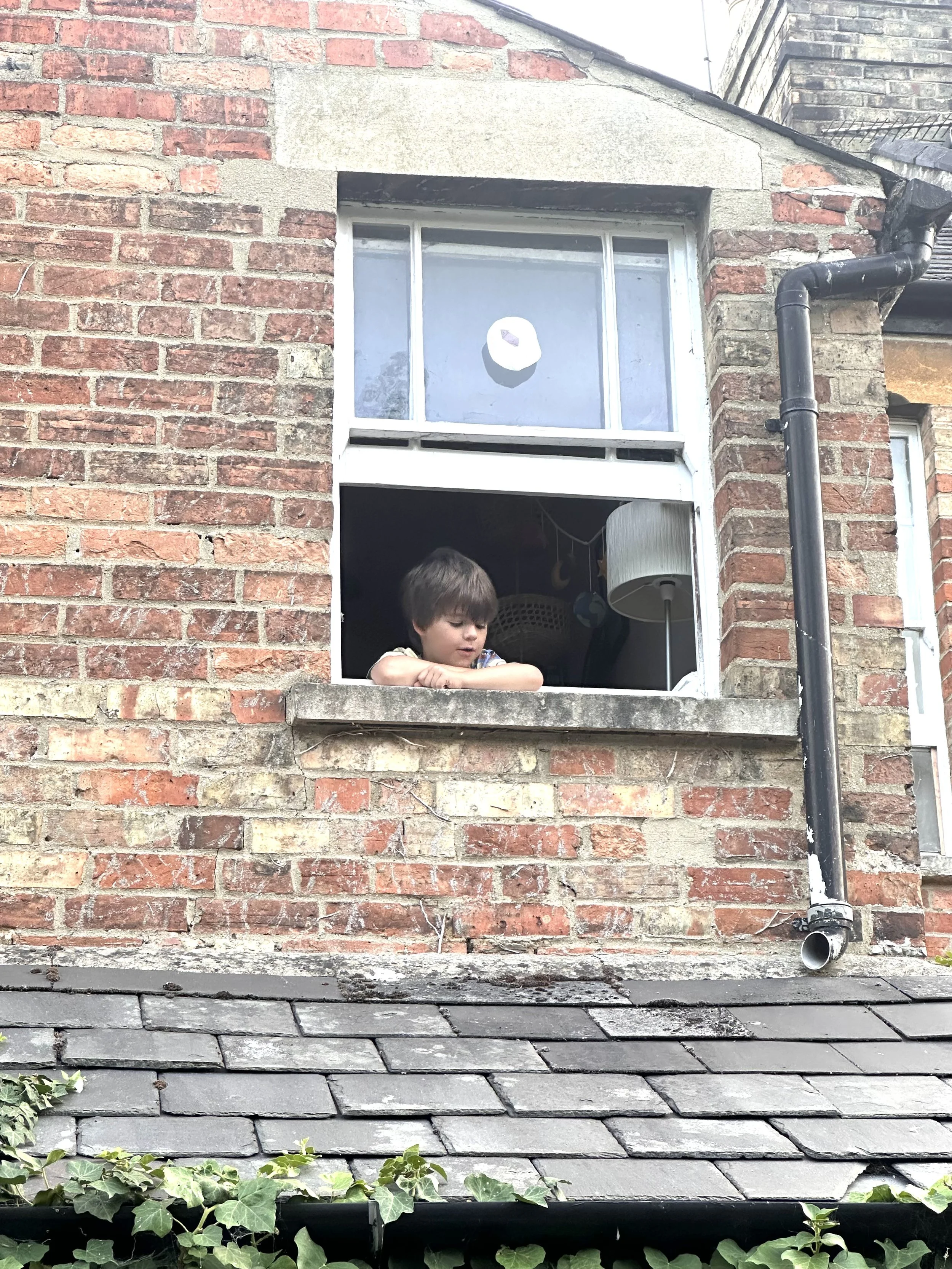
We have traveled 5,000 miles to be here, and I still feel exhausted and dazed, but it was essential to have time with the kids, and somehow, we have traversed the weary corridors from one world to another and deposited ourselves in England like lost luggage. We are staying in the upstairs room of an old brick house where we have stayed many times in the last decade, and our hosts are gone, but it’s very familiar, although the stairs are more numerous than I recall, with a sharp angular turn at the top, and I climb them gingerly, which is how I approach most of my climbings these days. We are just a few blocks away from our daughter’s house, and I enjoy the walk back through the neighborhood at night, when even at 10 p.m. the sky has not relinquished its pale summer light, and may I never take for granted the sheer wonder of being able to do this.
And yet, my thoughts are snagged in the branches of the community I have left behind. There are blissful moments, of course. Felix sat next to me on the front row seat of the upper level of a double decker bus, and another passenger came up to me afterwards and thanked me for my spirit-lifting exuberance. Earlier in the day, 18-month-old Alice pointed to me and said Nonna, crystal clear, and maybe this, as they say, is what it’s all about.
But I feel a sense of having abandoned the work at home. Texts come in at curious hours from faraway friends like little sparks and lights, and although glad to be remembered, I feel useless and irrelevant. I met a woman from California who was traveling with her teen-age son. Speaking in a kind of code at first, we acknowledge the disaster of what is happening to our country, and she asks me if we ever think of relocating here. I tell her this would feel like giving up. It is essential to stay, stand up, and fight back…isn’t it? But she has the opposite reaction. “I’m just so glad to be away,” she says. “I don’t think about any of it.”
I understand that my anxiety in itself is not helpful, but this is how I’m wired. I fully believe that even with time out for brief infusions of joy, we have a duty to pay attention and figure out a way of helping. This is perhaps a moral choice, and how I make meaning, but it is also the truest gift that I can give to the grandchildren. Yesterday my son-in-law handed me small yellow paperback by Gal Beckerman called How To Be A Dissident, and it is filled with good advice. My favorite line: “Dissidents are taking seriously and applying great imagination to the task of being human.”
Do not worry if what you do will make an immediate difference, Beckerman says, and perhaps it seldom does. Much depends on a certain kind of faith in the going forward, in inspiration and ripple effect. But here is a list of headings I gleaned from the book, each of which deserves some exploration, but collectively they comprise a handy guide: Be Watchful; Be Reckless; Sacrifice for the Right Reasons; Be Pessimistic (Do Not Assume Success is Certain); Be Funny (Laugh at Power, Keep Asking Questions); Be Loyal (Grow Beyond Yourself); Be Presumptuous (Behave As If You Have Power); Be Human (See Others Fully); and Be Immortal (Focus on A Future after You).
I’m going to close this post with that focus on the future, which seems very fitting as I get ready to walk the few blocks to see the grandchildren. (The person who was once my little girl has silver strands in her dark hair now and she isn’t feeling well today; a trip to the playground may be required of us, and we need to rally.) In any case, Felix and I wrote a poem yesterday about imagination and possibility, and I’d like to live up to that. “It’s POSSIBILITIES,” he said, “Not NEVER-bilities.” And that will be our motto. (Well, we also wrote a poem about farting, but let’s stay lofty here.)
If the heart fails in the weighing, I do not know where the Ka will go. But I am here now, ready to embrace responsibility, bearing witness, documenting, constructing a self, imagining something better.