Not Out of Sorrow, But In Wonder
You would not have known it was Christmas in my house, but it was a special time to me because my brother and his daughter were visiting from Atlanta. Their flight came in on a windy, rainy night, the day before the airport was closed due to flooding. I am sixteen years older than this brother, and I had not seen him in well over a decade; I yearned to reconnect with him in a real way, and to get to know my niece, who was just a child when I last saw her.
They spent a night in a motel near the airport and arrived here in the morning. The rain continued, the wind howled, the green hills shimmered, clouds hid the mountains, and the windows were bejeweled with raindrops. But our house was warm and welcoming, even in its emptiness.
You have your story, whoever you are. No one escapes the weight of history, the complexities of family, the ongoing effort to forget or make sense of it. My brother and I talked about the strange dysfunctional household that shaped us. We summoned up memories that don’t feel real or possible, but were confirmed to one another, and we felt the remains of the pain, but we marveled at our own resilience, and how much crazier we could have become.
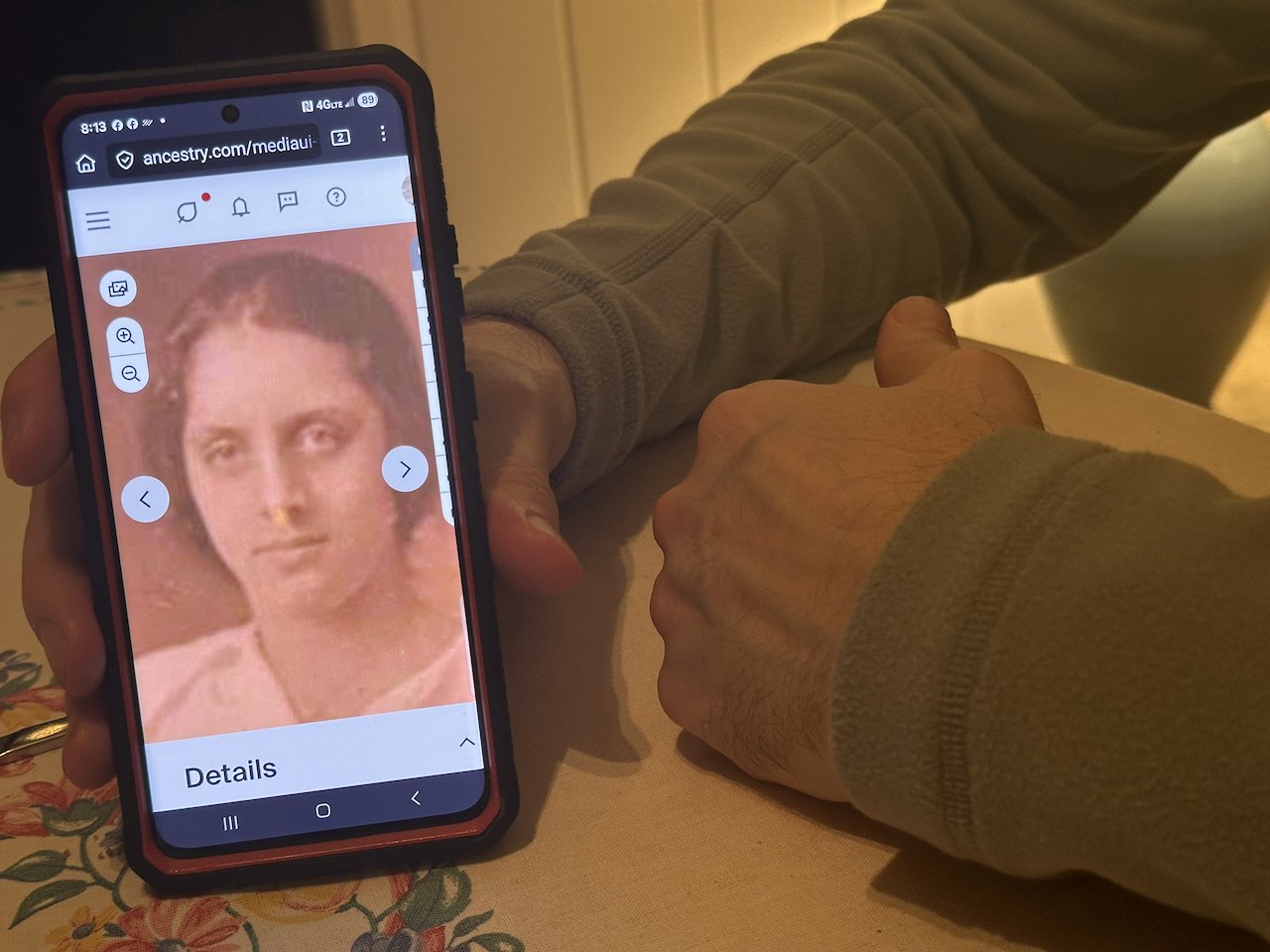
Among his other talents, my brother is a whiz at genealogical research, and he told me more about our sad-eyed Italians and Ashkenazi Jews and showed me a few photos he has unearthed. I felt the heaviness and the buoyancy of the tales we carry in our DNA, and I saw once again that my whole life is about trying to make some meaning from all the struggle and sorrow of those who came before us, which seems the best way to honor them, and to learn to accept joy when it appears, and to feel grateful instead of guilty.
And the greatest gift of this particular Christmas was that my brother and I could know each other in our current lives, each of us meeting who the other has become.
I don’t know what my niece, Rose, thought of all this. She’s a quiet young woman, an only child like my daughter. It isn’t easy starting out in life, it never was, but especially so in this strange dystopian world. Rose is in graduate school, living in midtown Atlanta, but I soon discovered she has a 19th century soul. She reads books, and she keeps a journal, and she longs to find a sense of community, and to see new places, and she is beautiful without being vain.
It was still raining in the afternoon, but armed with umbrellas and waterproof jackets, we all set out for a brief walk in the neighborhood. There were new lake-sized puddles and rushing rivulets everywhere, and across the street a diligent young couple was siphoning water from a flooded area in front of their neighbor’s house. The water had come perilously close to entering the home, whose occupants were gone and unaware. It was gratifying to witness this kindness in action.
We walked further and stopped in front of the corner house where a lonely lady feeds the wild turkeys. (I have glimpsed her, in a lilac-colored raincoat, scattering feed, and I counted as many as two dozen ugly birds gathered round.) Now there was a cluster of turkeys strutting and foraging in her yard as the rain came down, their plumage dark and iridescent with wetness, homely and ridiculous, their snoods and wattles dangling pink and gray. The exterior of the turkey-lady’s house is a peculiar pale shade of mint green, and the light was strange, and there was my little brother, familiar and dear but so much older, and Rose under an umbrella, just trying to figure out how to navigate the world, and all of it seemed utterly surreal to me, that everything that ever happened would have led us here watching turkeys in the rain on Christmas day in front of a mint green house on the other side of the continent.
The next day they went on a father-daughter road trip to Tehachapi or some unlikely place and I went for a wander here in the local wonderland, thinking about things, but mostly listening to music, and now and then the sun broke through the clouds, and the world was luminous.
I still can’t get over the fact that I can walk amidst nature or walk into town, or some combination of both. I dropped off a sweater to be dry-cleaned and recognized the woman at the counter from years ago, when we used to bring Monte’s work shirts to be laundered, and we were all still young but didn’t realize it. This woman remembered us, and she told us that she had recently lost her husband, her mother, and a sibling, but she was still standing, even in her grief, and we hugged each other, and I thought how important the connections are with the people you meet in stores and businesses, just doing your mundane transactions, how real they are, and how we miss those human interactions when everything is online and abstract.
By now, I had a hankering for candy, so I detoured to the grocery store, and on my way in, I met my good friend Linette, and we talked and hugged and promised that we would meet up by intent very soon. Then, carrying a bag of sweets I had purchased from the bulk food section of the store, compulsively chomping on dried papaya slices and sugary fruit gummies and listening to Tu Vuò Fa' L'Americano, I went straight into the crowded center of Solvang, where everyone, post-Christmas, was still happily strolling and shopping, holding hands and taking pictures, rain or no rain. To get back home, I walked through the meadow behind the Mission, and I saw Kelley’s favorite oak tree and the shifting light on the mountains, and the emerald green grass of the golf course now punctuated with the silver bolts of shining new streams. And Monte reported via text that he had bought a new rake and an excellent broom and wait ‘til I see how nice the walkway looks.
I cannot stop thinking of this stanza from the poem “Encounter” by Czeslaw Milosz:
O my love, where are they, where are they going
The flash of a hand, streak of movement, rustle of pebbles.
I ask not out of sorrow, but in wonder.
I too ask. I remember and I document, not in sorrow, but in wonder. Oh, the sorrow is there, but sometimes the light plays tricks with it—sometimes I believe it’s all a song that has not ended.
My brother and niece are still in Tehachapi or someplace like that, but coming back soon. Shreds of clouds are clinging to the branches of the olive grove, there are pears and persimmons in a bowl on the table, and a passing turkey pecks and preens. I was once a little girl on Coney Island Avenue, and everything that ever happened has led to this implausible now.